
Pipe Repair & Repiping in Cuyahoga Falls
A pinhole leak, a ceiling stain, rusty water or a shower that turns to a trickle: we find the leak, fix it properly and tell you honestly whether the rest of your pipe has years left in it.
Finding and Fixing Leaks
A leak rarely shows itself where it starts. Water runs along a pipe or a joist before it drips, so a stain on the ceiling can be several feet from the actual leak. We trace it back to the source with as little opening of walls and ceilings as the job allows, repair the damaged section, and check the pipe on either side for the same problem.
Leak repairs and repiping are a big part of Declan’s work. He has dealt with enough old Cleveland-area homes to know his way around outdated galvanized pipe and tricky basement setups, where decades of patches, mixed materials and pipes run wherever they fit are normal.
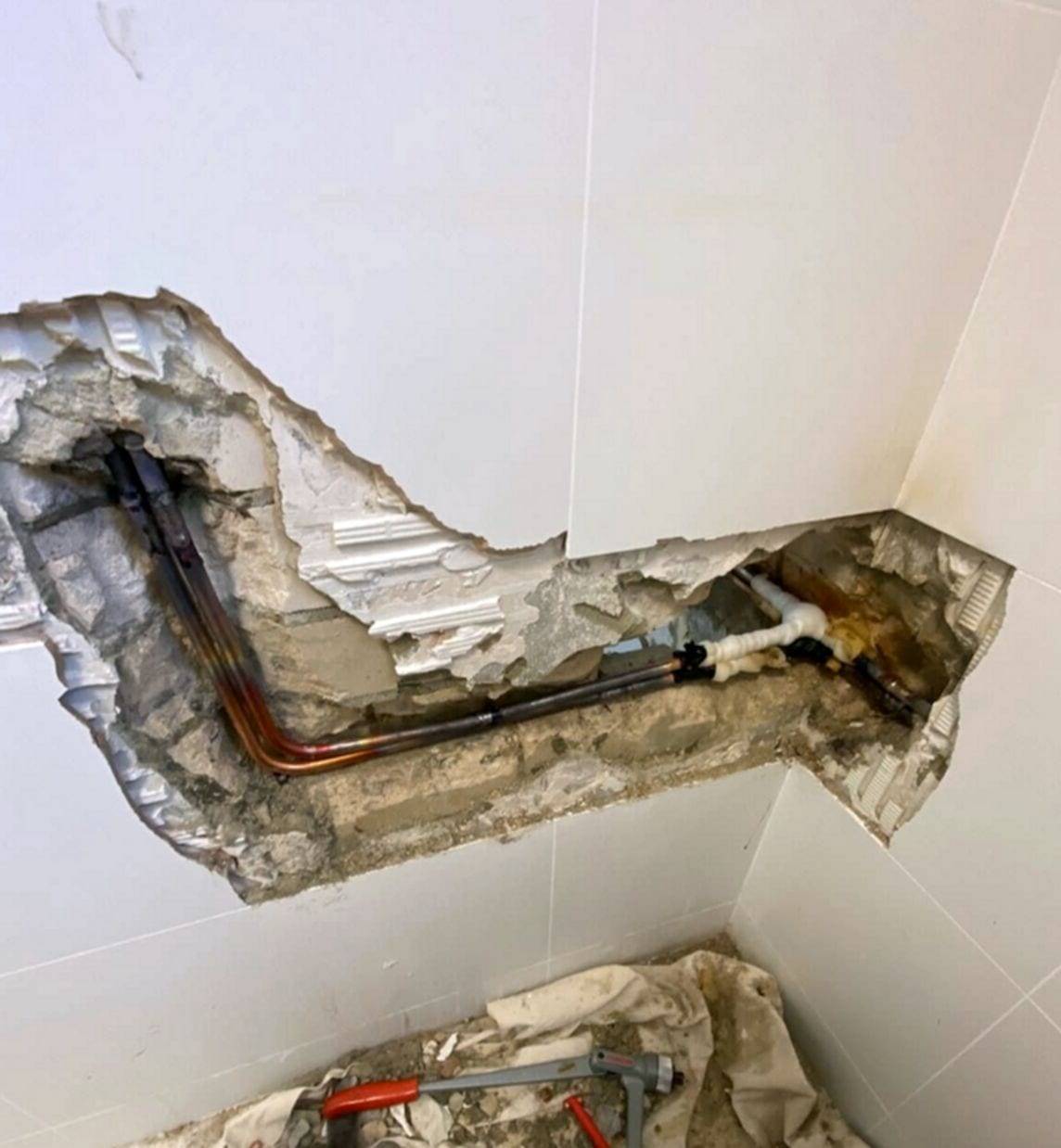
What Kind of Pipe Do You Have?
The pipe in your walls decides how it fails and what the sensible fix is. Look where the water line comes through the basement wall at the meter: dull gray threaded pipe is galvanized steel, copper is copper-colored, and flexible red, blue or white tubing is PEX.
| Pipe | Where You Find It | How It Fails | Our Recommendation |
|---|---|---|---|
| Galvanized steel | Houses built before about 1960 | Rusts from the inside: falling pressure, brown water, leaks at the threaded joints | Replace failing sections now; plan a repipe once the system is worn out |
| Copper | Common from the 1950s on | Pinhole leaks where corrosion eats through the wall; green crust at joints | Repair the leak and check nearby runs for thin spots |
| PEX (flexible plastic) | Newer homes, remodels and repipes | The pipe rarely fails; trouble is usually a fitting or pipe damaged during other work | Repair the fitting; a good choice for many repipes |
| Polybutylene (gray plastic) | Some homes built from the late 1970s to the mid-1990s | Pipe and fittings can crack without warning | Replace it; patching does not change the odds |
Pipe Symptoms, Causes and Fixes
What you notice at the tap or on the ceiling usually points to one of these.
| Symptom | Likely Cause | Our Fix |
|---|---|---|
| Low water pressure | Galvanized pipe narrowed by rust, a failing pressure regulator or a partly closed valve | Check the pressure at the meter and the fixtures to find where it drops, then replace the restricted pipe or valve |
| Discolored or rusty water | Rust from galvanized supply pipe, or sediment stirred up by work on the city water main | Run the cold tap to see whether it clears; if not, trace it to the pipe or the water heater and quote the fix |
| Visible corrosion on pipes or fittings | Green or white crust on copper joints, rust on galvanized threads, or two metals joined without the proper fitting | Replace the corroded fittings and correct mismatched connections before they start to leak |
| Pinhole leaks | Corrosion working through copper pipe from the inside | Repair the leak, check the line for more thin spots, and talk through repiping if leaks keep appearing |
| Water stains on a ceiling or wall | A leaking supply pipe, fitting or drain somewhere above the stain | Trace the water back to its source, repair it and confirm the area stays dry |
What a Repipe Involves
A whole-house repipe replaces the water supply lines from the main shutoff to every fixture. We plan the new runs to keep openings in finished walls and ceilings few and small, run most of the new pipe from the basement or crawlspace, and connect each fixture with a new shutoff valve. Before anything is closed up, the new system is pressure-tested and every joint is checked dry. Where the job needs a permit and inspection, the work is done to pass it the first time.
A repipe is planned work, not an emergency, so you have time to decide. You get an upfront quote, the schedule and an honest opinion on whether your pipe really needs it yet.
Before the Visit
For an active leak, the first step matters most.
- Shut off the main valve if it is leaking. Then open a faucet on the lowest floor to let the pressure off the lines.
- Note the affected fixtures. Which taps have low pressure or discolored water? Hot, cold or both? Since when?
- Clear basement or crawlspace access. The water line comes in at the meter, usually in the basement. Clear a path along the main pipe runs.
- Move items away from walls. For a leak inside a wall, or for a repipe, pull furniture and stored things a few feet back from the walls we will work on.
Repiping Decisions: Common Questions
What are the signs it is time to repipe?
Leaks in more than one place within a year or two, galvanized pipe with rust-colored water and falling pressure, or a system patched so many times that nobody knows what is in the walls anymore. A single leak in otherwise healthy pipe is just a repair, and we will tell you that.
What affects the cost of a repipe?
The size of the house and the number of bathrooms and fixtures, how easily the pipes can be reached from the basement or crawlspace, how many finished walls and ceilings have to be opened, the pipe material, and whether a permit and inspection are required. We quote it upfront after walking through the house, so you know the number before you decide.
How long does a repipe take, and will we have water?
It depends on the house. Most of the new piping goes in while the old lines are still in service; the water is off when the new lines are connected. You get the schedule with the quote, including when the water will be off.
Copper or PEX: which is better?
Both are good when they are installed right. Copper is rigid and durable and handles exposed runs well. PEX is flexible, needs fewer fittings, can be pulled through walls with fewer openings and tolerates freezing better than copper, though it can still burst. We recommend the one that suits your house and explain why.
Related Pages
Leak, Stain or Rusty Water?
Call Declan. Shut off the main if water is leaking, and you will get a straight answer and an upfront price.