
Sewer Line Repair & Replacement in Cuyahoga Falls
When several drains back up at once or the yard smells like sewage, the trouble is usually the line between your house and the street. We find out what is wrong with it and explain your options before anything is dug up.
Old Lines, Familiar Problems
Many older neighborhoods in and around Cuyahoga Falls were built with clay tile or cast-iron sewer lines. Clay pipe comes in short sections joined every few feet, and those joints are where roots get in and where pipes shift out of line as the ground settles. Cast iron rusts from the inside, narrowing until it catches everything that goes down it, and eventually it cracks.
Our first job is the diagnosis. We clear the line enough to get through it, look inside it, and find where the problem is and how deep it sits, so you see what we see. Some lines need one bad section repaired; some are worn out end to end.
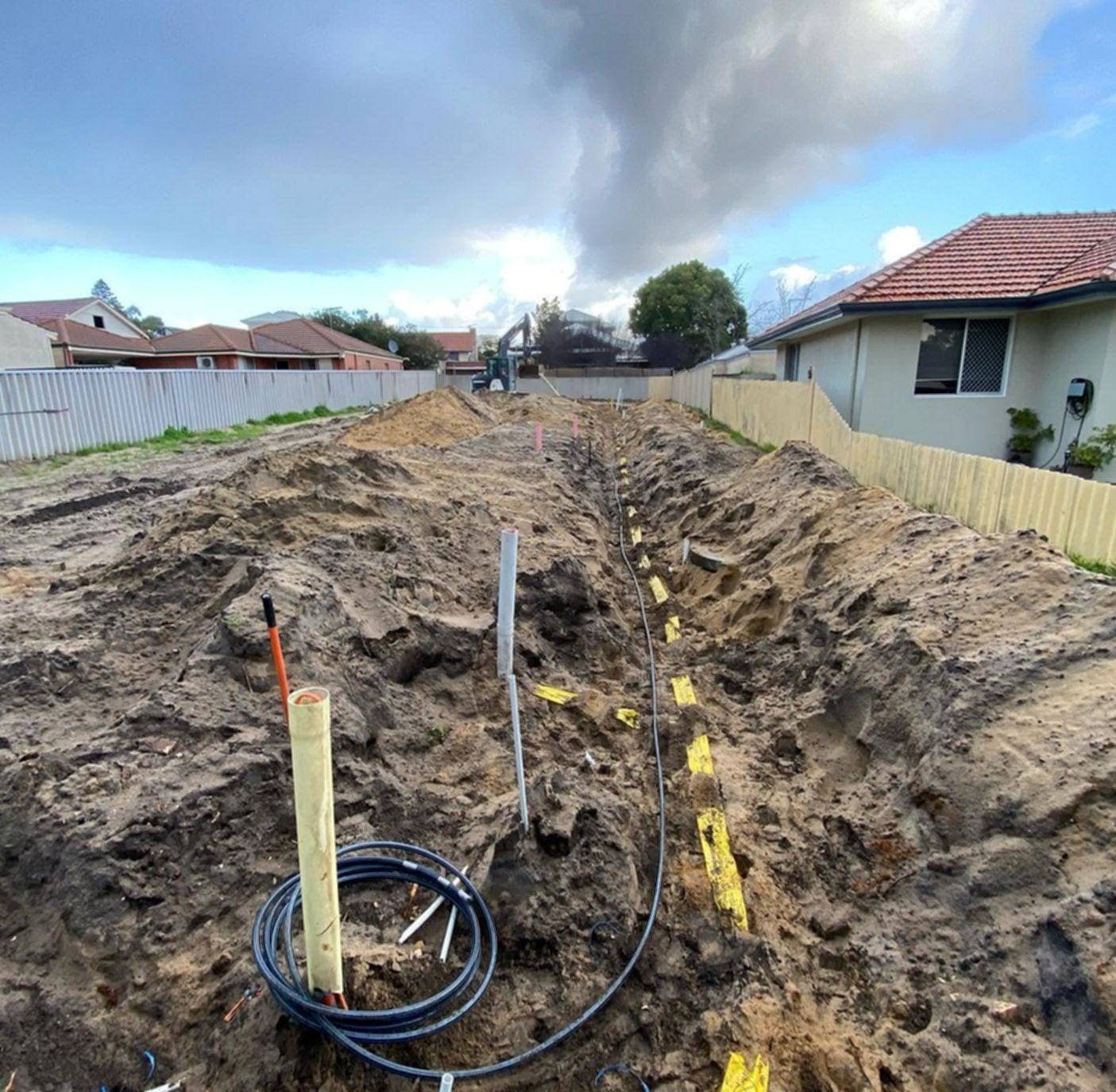
You get the options and the price for each before any work starts, and we will not push a full replacement when a repair will do. A section that has to come out can be replaced two ways. An open trench is the traditional method: dig to the pipe, replace it, backfill and restore. Trenchless methods, such as lining the old pipe or pulling a new one through it, can mean far less digging when the line’s condition and layout allow. They do not suit every line, and we will tell you honestly which applies to yours.
Sewer Line Symptoms, Causes and Fixes
One slow drain is usually a drain cleaning job. These signs point to the main line.
| Symptom | Likely Cause | Our Fix |
|---|---|---|
| Several drains backing up at once | A blockage in the main sewer line: roots, grease or a collapsed section | Clear the main from the cleanout, then look inside the line to find the cause |
| Sewage smell in the yard | A cracked or separated pipe leaking below ground | Locate the damaged section, then repair it or replace the line |
| A soggy or extra-green patch over the line | Sewage seeping from a broken pipe or an open joint | Confirm the leak, then repair that section or replace the line if it is failing along its length |
| Slow drainage throughout the house | A partial blockage, roots, or a sag in the line that holds water and debris | Clear the line, find the sag or the root entry point, and quote the repair that fixes the cause |
| Toilet bubbles when the washer or tub drains | Air pushed back up through a partly blocked main line | Clear the main and check it for root intrusion |
Before the Visit
If sewage is backing up, these steps keep the damage down until we arrive.
- Locate the cleanout. Usually a capped 3- or 4-inch pipe in the basement near the front wall, or outside close to the foundation. Clear the area around it.
- Avoid running water. Every flush, shower and load of laundry adds to the backup. Hold off until the line is clear.
- Keep pets and children away from the yard area. Sewage on the surface carries bacteria, and soft ground over a broken line can give way.
- Gather past repair records. Earlier sewer work, dates of root cutting or an old inspection report help us tell a new problem from an old one.
- Note the big trees. Large trees between the house and the street are the first suspects when roots are involved.
Sewer Line Age: Common Questions
How long does a clay sewer pipe last?
The clay itself is durable, and many clay lines are still carrying sewage after more than 50 years. The weak points are the joints. Older clay pipe was joined with mortar or tar-based packing that cracks and lets roots in, and the short sections shift as the ground settles. A clay line can be sound for decades and then fail at a single joint, which is why we look at the whole line before recommending anything.
Trenchless or trenching: which is better?
Trenchless repair, lining the old pipe or pulling a new pipe through it, usually means far less digging and less damage to the lawn, driveway or landscaping. It needs a line that still holds its shape and can be reached at both ends. A collapsed section, a bad sag or a line with many changes of direction may still need an open trench. Neither method is better in every case; the right choice depends on what is inside your line.
How do roots get into a sewer line, and will they come back?
Roots follow moisture. They enter through joints and hairline cracks and grow into a mat that catches waste. Cutting them clears the line, but they usually return because the opening is still there. The lasting fix seals or replaces the section where they get in. Our drain cleaning page covers what to do in the meantime.
Can a sewer line be repaired without replacing all of it?
Often, yes. If the damage is in one place, such as a broken joint near a tree, a section repair fixes it for much less than a full replacement. If the joints are failing along the whole length of the line, repairing one spot at a time stops making sense, and we will tell you so.
Related Pages
Sewage Backing Up?
Stop running water, then call Declan. You get a straight answer on what is wrong and an upfront price for each option.